My First Svalbard Expedition
At the end of June 2019, after nearly two years of planning and anticipation, I flew to Longyearbyen on the island of Spitsbergen for my first expedition into the High Arctic.
Svalbard had been at the top of my list of places to visit for as long as I could remember. Before leaving, I imagined the trip would be roughly 50% about the adventure and experiencing somewhere so extraordinary, and 50% about photography — with the ultimate ambition of coming home with that perfect photograph of a Polar Bear on the ice.
In reality, it probably became 80% about the experience and 20% about the photography. Looking back, I'm very pleased it worked out that way.
I travelled with a friend I'd shared many previous trips with and we'd spent a lot of time choosing the right expedition. We eventually settled on a ten-day voyage aboard MS Quest, a small ice-strengthened expedition ship carrying just 50 passengers. Its size meant fewer people, more opportunities to get ashore and, importantly, the ability to reach places that many of the larger ships couldn't.
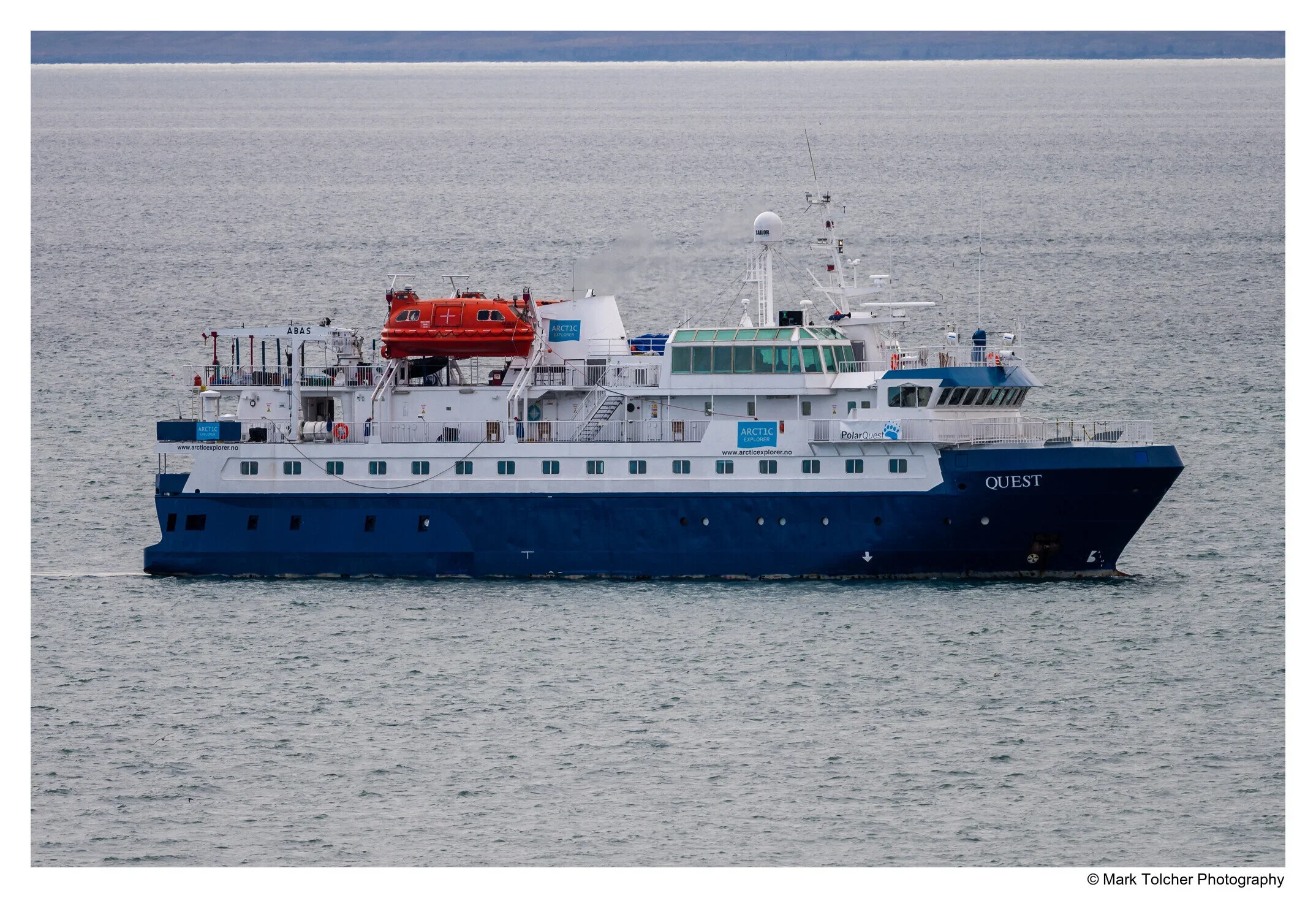
At our first briefing, the expedition leader made one thing very clear: we were on an expedition, not a holiday. Looking at the weather forecast for the days ahead, we were about to find out exactly what he meant.
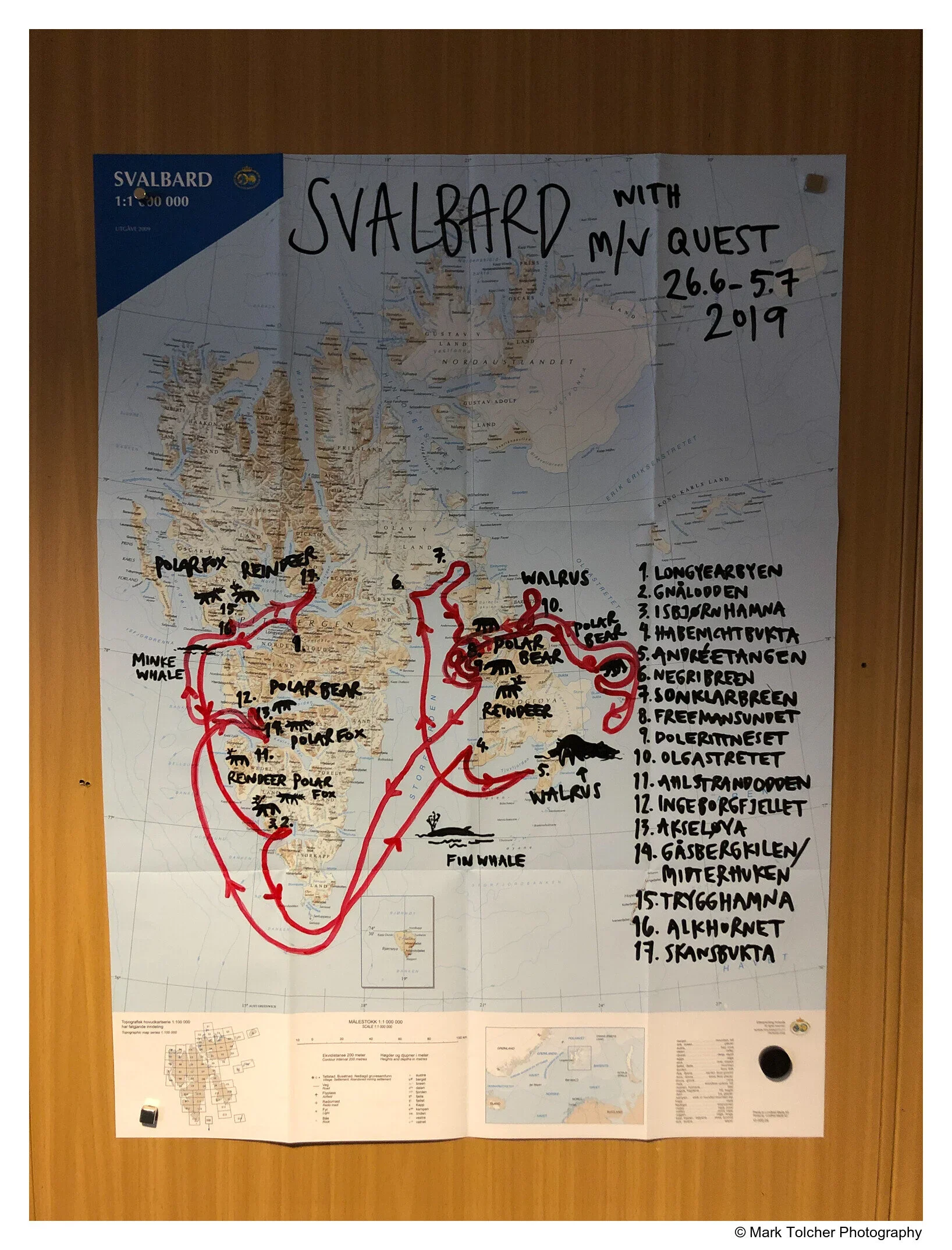
Our first day in Longyearbyen couldn't have been more deceptive. The sun was shining, birds were singing and there was even some blue sky. As we left the harbour, still getting used to just how small our ship looked against the surrounding landscape, a Minke Whale was spotted and we changed course to get a better view.
It would be the last sunshine we'd see until almost the end of the expedition.
Over the following days we experienced winds approaching 70 knots, rain, fog, snow and seemingly every variety of Arctic cloud. Once we reached the pack ice, even wearing more than four thermal layers, the cold could be bone-chilling.
The conditions dictated almost everything we did. Our route changed with the weather and Zodiac landings depended on whether it was safe to get ashore. Some of the journeys in the small boats became fairly spirited affairs, and getting back onto MS Quest could be even more entertaining.
For me, that simply added to the sense of adventure.
At one point we were forced to shelter overnight in a bay, with high winds and strong currents preventing us from heading in one direction and impassable ice blocking the other. On another night, the captain had to keep the ship's engines running continuously against the current to reduce the strain on the anchors.
Eventually a break in the weather gave us the opportunity we'd been waiting for. We made our way through a narrow passage between two islands and out into the pack ice.
For the next three days we were at sea, surrounded by ice, searching for Polar Bears and other Arctic wildlife.
Late one afternoon, word began to spread quickly around the ship.
A bear had been spotted.
With the high winds and rough conditions, any bears in the area were likely to be hunkered down, so simply finding one felt incredibly fortunate. The atmosphere on board immediately changed as everyone headed outside and MS Quest cautiously began working its way through the pack ice towards him.
Progress wasn't easy. Huge sheets of ice lay between us and the bear and the ship had to carefully test its way through, using its ice-strengthened hull to manoeuvre some of them aside. Every time we seemed to make progress, the bear would get up and walk further away.
We never managed the close encounter I'd dreamed about before the trip, but everyone on board got to see him — including a wonderful moment when he slid down a section of ice.
For my first ever Polar Bear, in the middle of the Arctic pack ice, it was still an extraordinary experience.
Unfortunately, deteriorating weather meant we couldn't stay.
News from the bridge forced us to make a fairly hasty retreat before the ice closed in around us. By the following morning the channel we'd used to reach the pack ice had closed behind us. We later discovered the crew had endured a very long night getting us safely out, with the ship becoming caught in the ice on more than one occasion and being pushed towards the shore.
It was a fairly dramatic reminder that, this far north, nature really does dictate the itinerary.
The Polar Bear might have been the wildlife encounter I'd most hoped for, but it was only a small part of what made the expedition so memorable.
Our Zodiac landings took us to bird colonies and across the Arctic tundra, while reindeer and walrus seemed to appear in numbers I quickly stopped trying to count. At that time of year the tiny Arctic wildflowers were beginning to emerge for their incredibly short growing season, adding small patches of colour to an otherwise stark landscape.
Svalbard has a barren, rugged beauty unlike anywhere else I'd experienced.
Scattered amongst that landscape were reminders of a very different period in its history. We came across old trapping huts, abandoned boats and large collections of whale and animal bones. In the Arctic cold, very little disappears quickly, while strict conservation rules mean historical remains are left where they are found.
They were a humbling reminder of the days when hunting, trapping and whaling formed a major part of life here and pushed some species close to disappearing from the region. Today many of those old cabins and historical sites are preserved, providing a fascinating connection to Svalbard's past.
Towards the end of the expedition, after everything the weather had thrown at us, the trip finished on a rather different note.
On our penultimate evening the crew organised a barbecue and disco on deck. Sitting in a beautiful Arctic bay surrounded by mountains, music playing while everyone stood around in warm coats, was wonderfully surreal.
Then, on our final day, the sun finally returned.
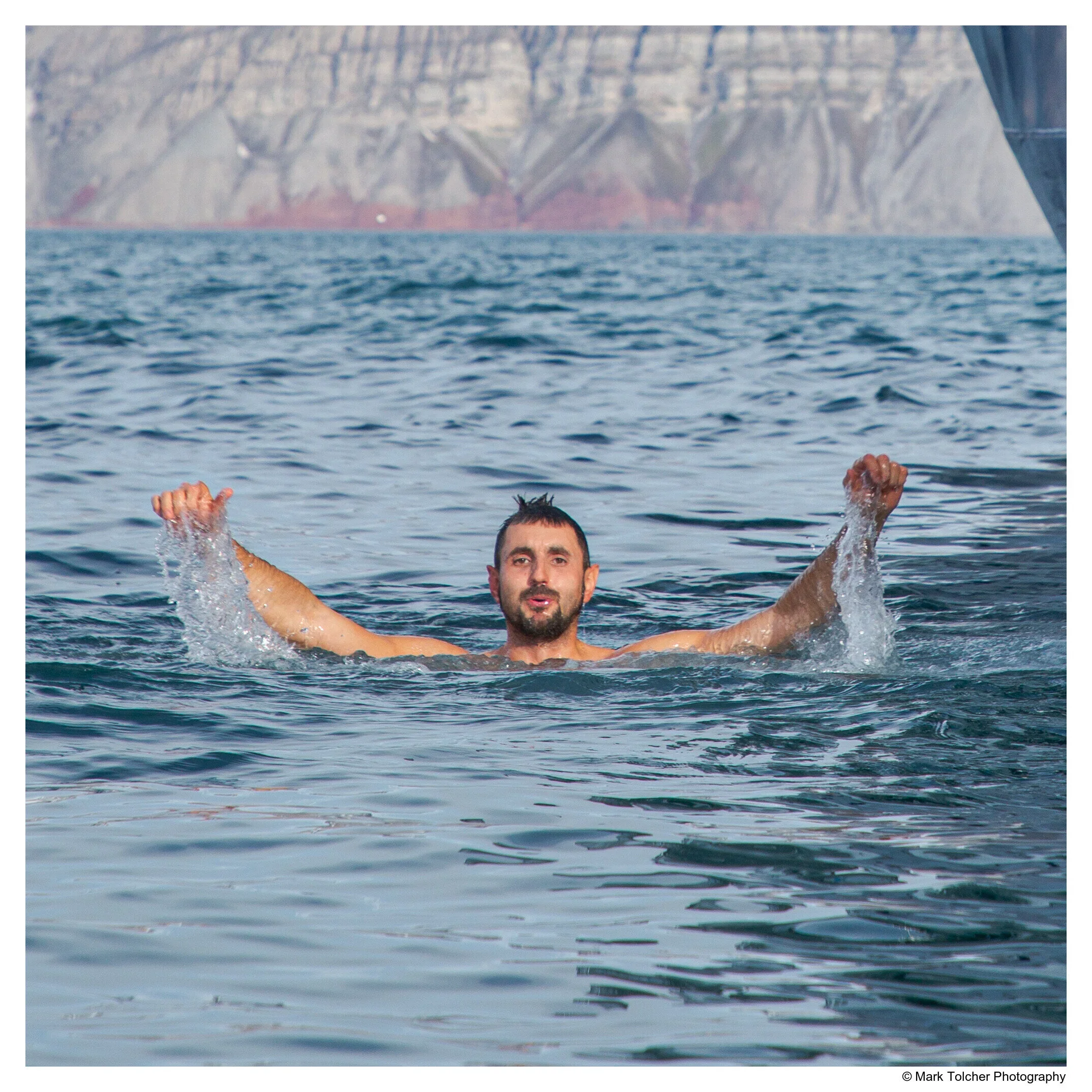
A small group of us decided there was only one appropriate way to celebrate — by jumping into the Arctic Ocean.
The Polar Plunge was brief, extremely cold and probably not something that required repeating, but it was a fitting end to ten remarkable days.
At the end of the voyage, the crew told us we'd probably been one of their unluckiest groups in terms of weather. It certainly hadn't felt that way. The difficult conditions had become part of the experience and there had been a constant sense of enthusiasm and excitement aboard the ship.
The expedition team were exceptional too. Between time ashore and searching for wildlife, the guides shared their individual areas of expertise through talks about the Arctic, its history and the wildlife that survives there. Along with the crew, they added enormously to the experience.
When I originally wrote about the trip a few weeks after returning home, I said I was struggling to adjust to normal life again. Svalbard had completely blown my mind.
I hadn't come home with the perfect Polar Bear photograph I'd imagined before leaving, but strangely that no longer seemed particularly important. I'd experienced the pack ice, Arctic wildlife, wild weather and a landscape unlike anywhere I'd been before.
I ended that original expedition wondering not if I would return, but when.
Six years later, in April 2025 after 4 failed attempts at returning to the Arctic I finally did.
Explore my Svalbard photography