Returning to Svalbard, An Arctic Wildlife Expedition - April 2025
Wildlife photography in Svalbard — April 2025
In late April 2025, six years after my first expedition to Svalbard, I finally made it back.
I’d wanted to return almost from the moment I left in 2019, but actually getting there again proved considerably more difficult than I’d expected. This was effectively my fifth attempt, with previous trips falling victim to Covid, maritime audits and, most recently, the bankruptcy of the expedition company I’d been due to travel with in December 2024.
Eventually, though, everything came together.
This time I was deliberately travelling much earlier in the year. My first visit had been at the end of June, whereas late April and early May offered the prospect of a very different Arctic landscape — considerably more snow and ice, frozen fjords and the beautiful pancake ice that forms as the sea begins to freeze.
By this point in the year Svalbard also has 24-hour daylight, with the sun simply circling the horizon rather than disappearing completely. That creates the potential for some wonderful light during the hours when, almost anywhere else, it would be completely dark.
The other major difference was the ship.
For this expedition I’d be travelling with Arctic Wildlife Tours aboard the MS Virgo, a small expedition vessel carrying only 12 guests. The trip was specifically geared towards wildlife and photography, which was exactly what I was looking for.
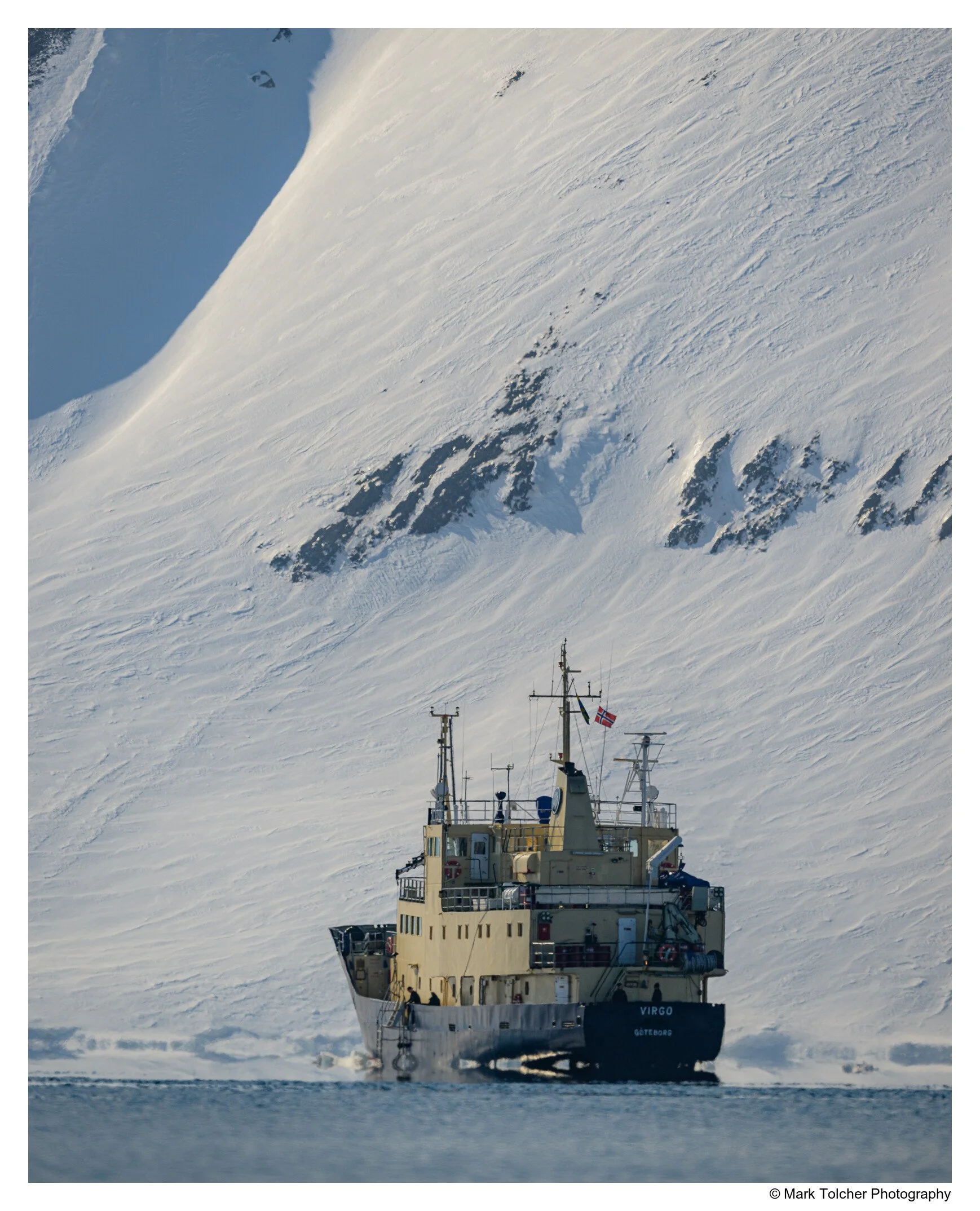
After travelling on a considerably larger ship during my first expedition, the advantages were immediately obvious. With so few people, two Zodiacs and plenty of room for camera equipment, everyone could get onto the water quickly whenever an opportunity presented itself.
Before the expedition had even started
I’d deliberately arrived in Longyearbyen a day early. With an expedition ship involved, missing luggage or a delayed flight can become a rather significant problem — the ship isn’t going to wait indefinitely for you to arrive.
My flight into Svalbard couldn’t have been better. There wasn’t a cloud in the sky and the snow-covered landscape looked spectacular from the air.
By the following morning, everything had changed.
Strong winds were blowing snow across the landscape and at times conditions were approaching a complete whiteout.
I’d heard that Arctic Foxes could sometimes be found relatively close to Longyearbyen and, following a recommendation from one of the polar guides I followed on Instagram, I’d arranged to spend the morning with a local guide, Laia, before joining the ship later that day.
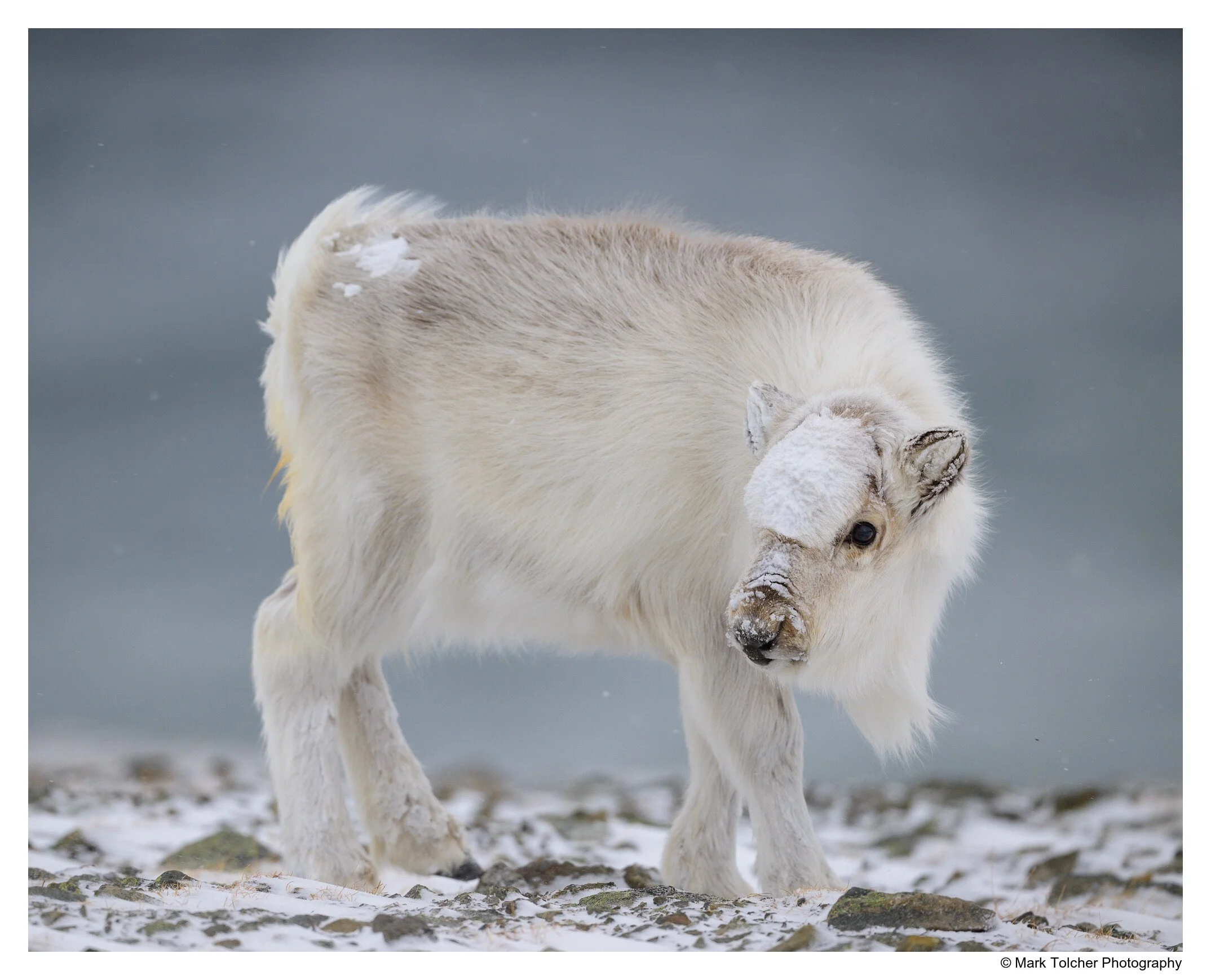
We initially found some young Svalbard Reindeer. Ice and snow were collecting around their heads and, with the wind driving snow through the scene and the sea behind them, the conditions were fantastic for photography.
Finding an Arctic Fox in the same conditions seemed considerably less likely.
Then we heard one calling.
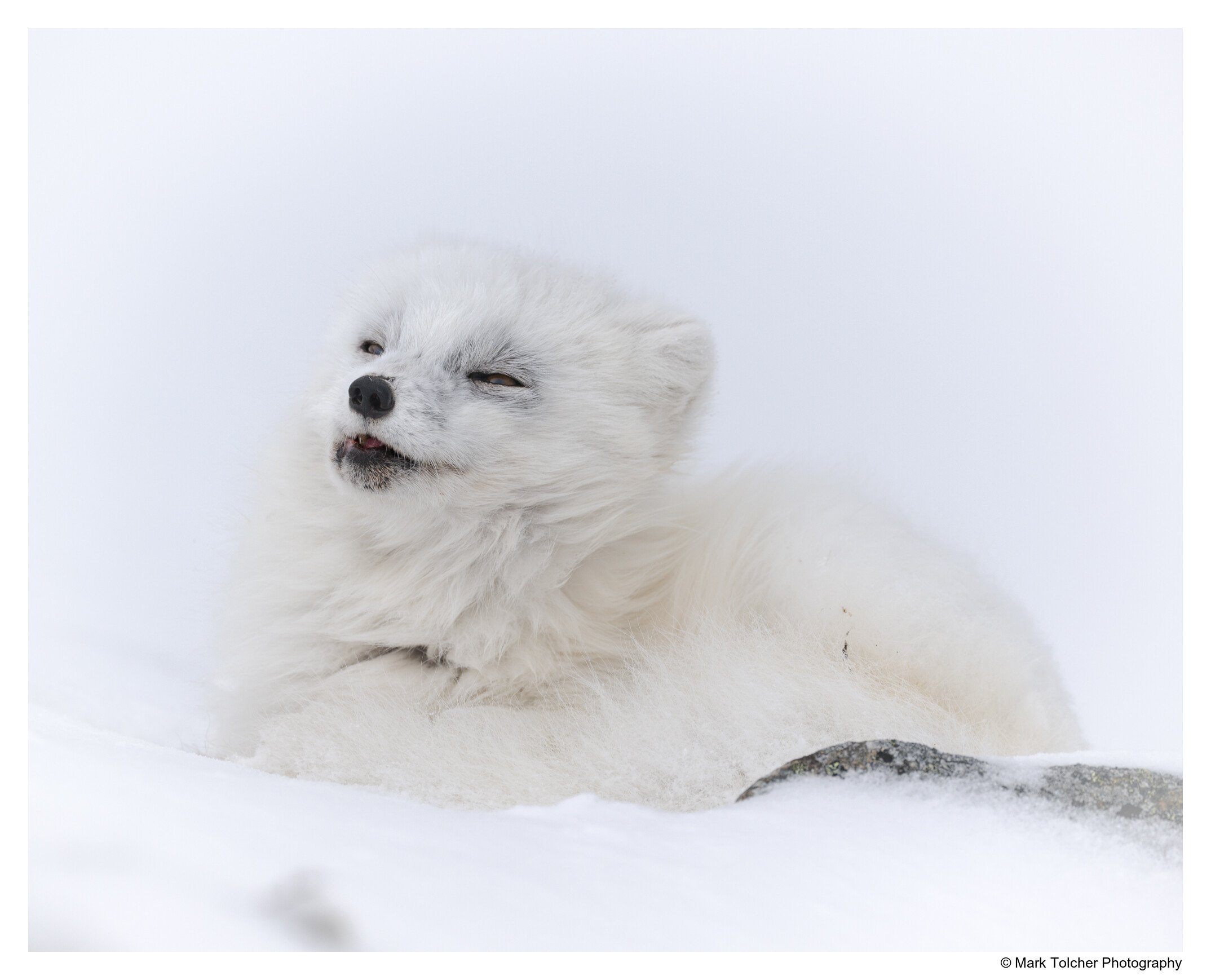
We crossed a frozen river and climbed partway up the side of a mountain before eventually finding a beautiful white Arctic Fox curled up asleep in the snow.
After carefully getting ourselves into position, we were able to spend some time photographing it as the snow blew across the mountainside.
Eventually another fox began calling somewhere in the distance.
The fox we’d been watching woke, got to its feet and began calling back. For a short while I was able to photograph it standing amongst the blowing snow, calling across the mountainside to its partner.
Eventually the two disappeared together further up the mountain.
It was one of those encounters where the conditions, the animal and the environment all came together — and the expedition hadn’t even started yet.
Heading into the Arctic
That evening I boarded the Virgo, settled into my small but comfortable private cabin and we headed out of Longyearbyen.
We were the only expedition ship to head south at the beginning of the trip and, after a slightly choppy night at sea, woke the following morning surrounded by beautiful Arctic scenery.
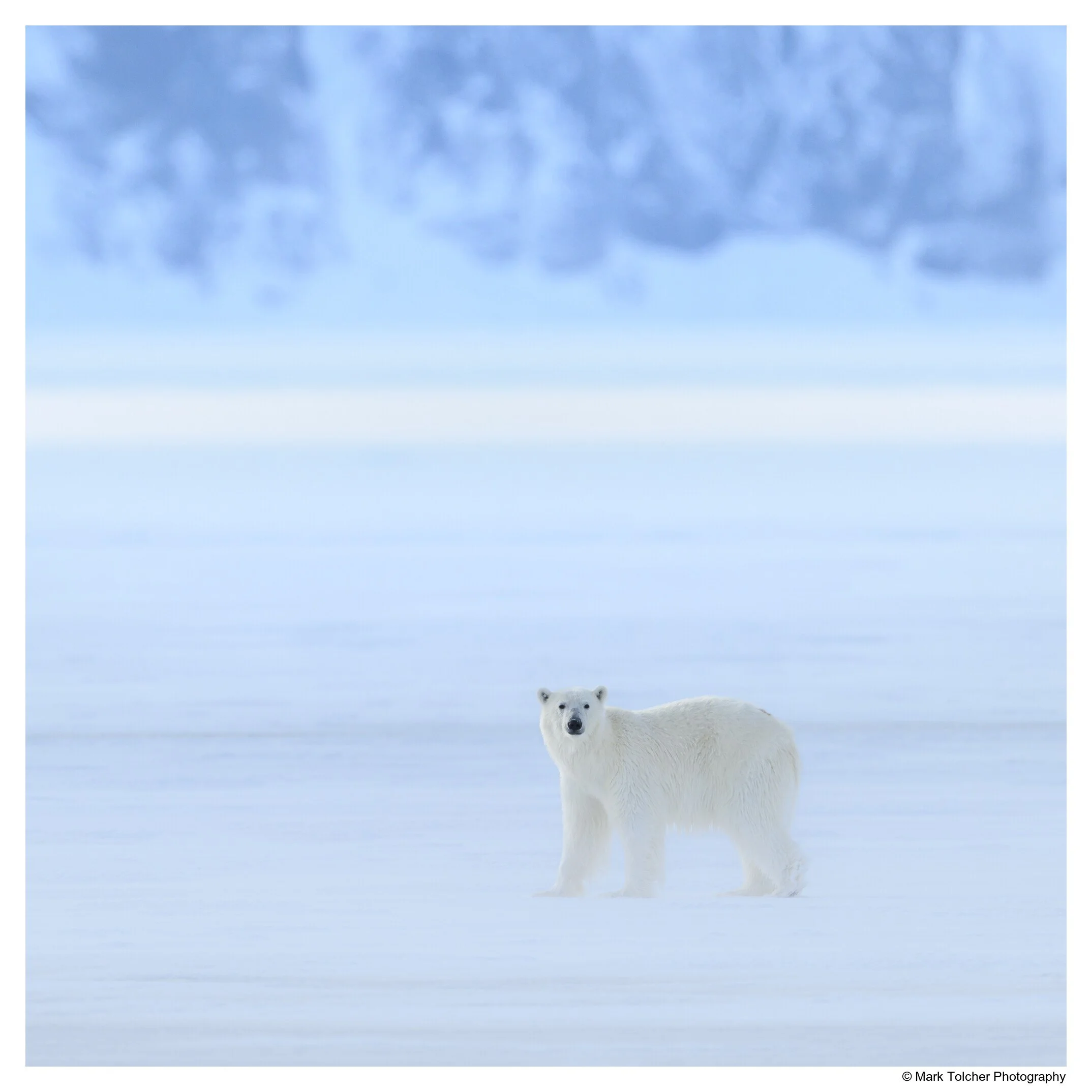
And there was a Polar Bear asleep on the ice.
Of course, seeing a Polar Bear immediately creates an expectation that something is about to happen.
It wasn’t.
The bear slept.
And slept.
So we waited.
For around 12 hours.
That’s the reality of wildlife photography, particularly somewhere like Svalbard. Finding an animal is only part of it; what happens next is entirely up to the animal.
Fortunately there was plenty else going on. A large group of Harbour Seals were nearby and we also watched a pod of Beluga Whales hunting along the edge of the ice.
Eventually our patience was rewarded.
The bear finally got up and began moving across the ice, briefly approaching the edge and giving us our first proper Polar Bear encounter of the expedition.
Into the pack ice
Over the following days we headed further into the Arctic pack ice in search of more bears and other wildlife.
The conditions couldn’t have been more different from that first morning in Longyearbyen. We had several days of almost uninterrupted sunshine and comparatively warm weather
There is something quite difficult to describe about being deep in the pack ice.
From a Zodiac close to the surface of the water, ice stretches away in every direction towards the horizon. There are no buildings, roads or signs of people. Just an enormous expanse of ice and the knowledge that somewhere amongst it there could be a Polar Bear.
We spent a considerable amount of time searching.
Unfortunately, the bears had other ideas.
Despite being in what looked like perfect Polar Bear habitat, we drew a blank during our time deep in the ice.
It’s an important part of any wildlife expedition. You can travel thousands of miles and put yourself in exactly the environment you’ve imagined, but there are never any guarantees.
And actually, it didn’t really matter.
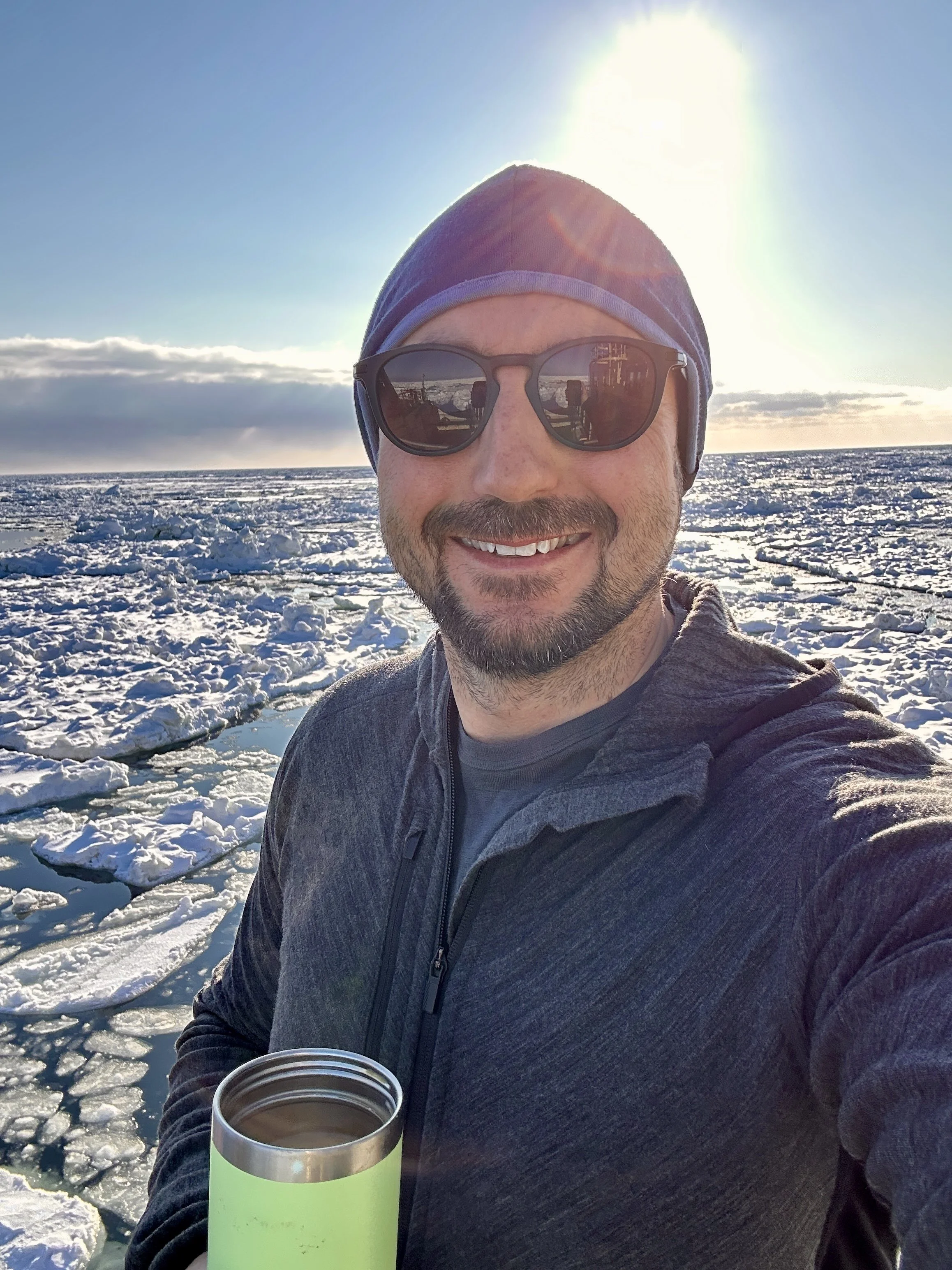
Simply travelling through the pack ice in a small ship and exploring it from the Zodiacs was an extraordinary experience in its own right.
Midnight in the Arctic
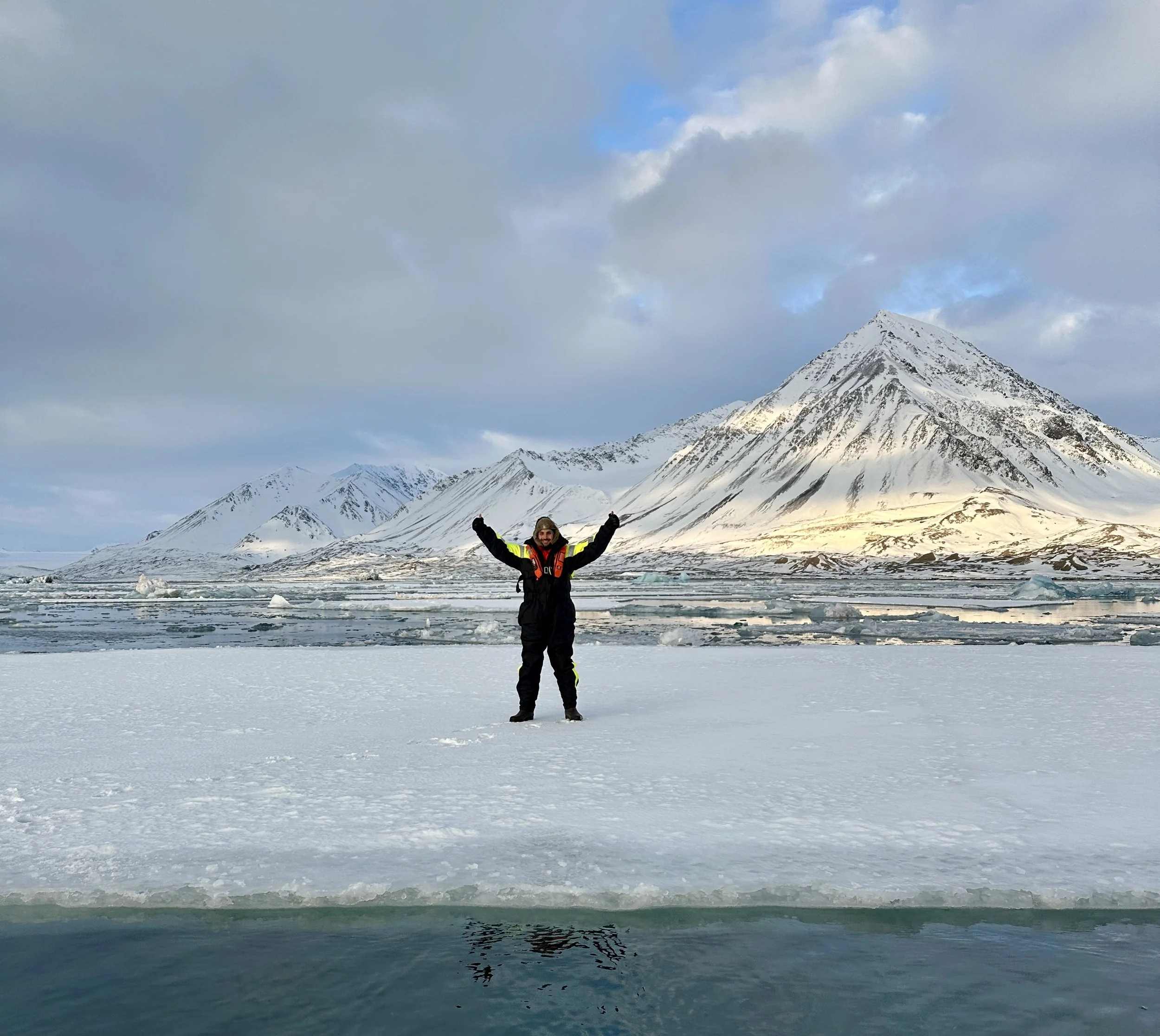
As we gradually began heading north again, we planned a midnight Zodiac cruise through a lagoon surrounded by glaciers, mountains and floating ice.
Except “midnight” becomes a slightly strange concept when the sun never sets.
The conditions were almost completely still. The mountains reflected in the water, pieces of ice drifted around us and the soft Arctic light illuminated the landscape.
It was beautiful.
There wasn’t a dramatic wildlife encounter or a particular photograph I was chasing. It was simply one of those moments when being somewhere extraordinary was enough.
Being out in a tiny Zodiac at midnight, surrounded by ice and mountains in almost complete silence, remains one of my favourite memories from the expedition.
Heading back south
Eventually we began making our way back towards Longyearbyen.
Along the way we found a couple more Polar Bears and also spent time with some very obliging Walrus resting on the ice.
After almost nine days aboard the Virgo, we spent our final night back in port at Longyearbyen. For the first time since leaving, I had the opportunity to step onto land again.
Rather than spend my final evening on the ship, I headed out once more with Laia, together with one of the other guests from the expedition.
There was one thing in particular I wanted another opportunity to photograph.
Arctic Foxes.
One last encounter
This time we found a different pair.
We initially watched them moving together along the ridge of a mountain, scent marking as they went, before they gradually began making their way down towards us.
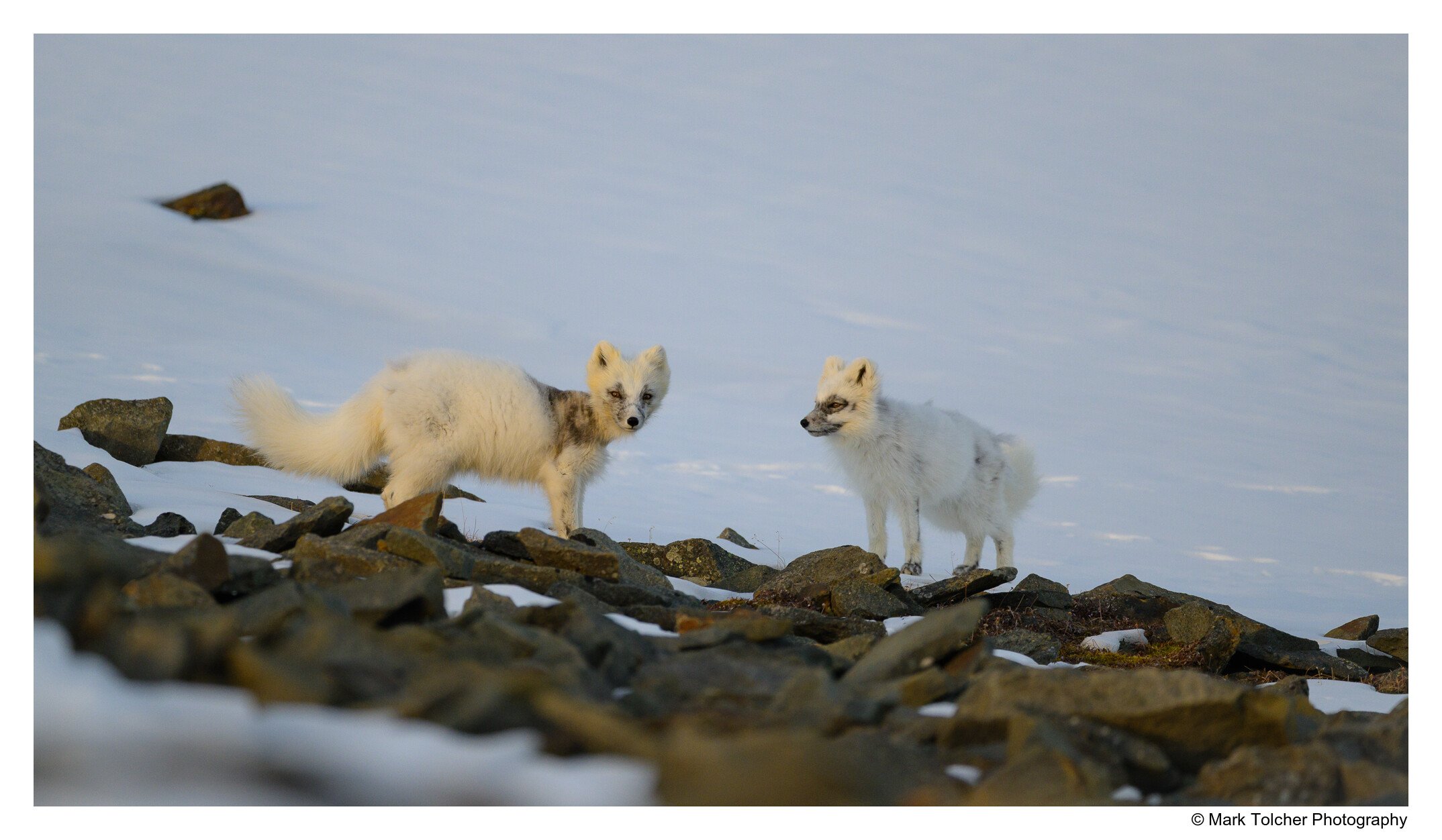
Eventually both foxes reached our level and crossed the road in front of us.
What struck me was just how much the landscape had changed while we’d been away.
Only a little over a week earlier I’d been photographing a completely white fox surrounded by blowing snow. Now almost all of the snow around Longyearbyen had disappeared and the foxes themselves were beginning to shed their white winter coats.
The conditions gave us something completely different photographically, including some beautiful opportunities to photograph them in backlight.
It felt like the perfect way to finish the trip.
I’d started the expedition photographing an Arctic Fox in a blizzard and ended it, little more than a week later, photographing another pair in an Arctic landscape already beginning to transition towards spring.
Six years later
Having now experienced Svalbard from two very different ships and at two very different times of year, the small-ship approach suited the way I wanted to photograph the Arctic perfectly.
The Virgo proved to be an excellent expedition vessel. With only 12 guests, plenty of room for equipment and the ability to get everyone into the Zodiacs quickly, we had enormous flexibility throughout the trip.
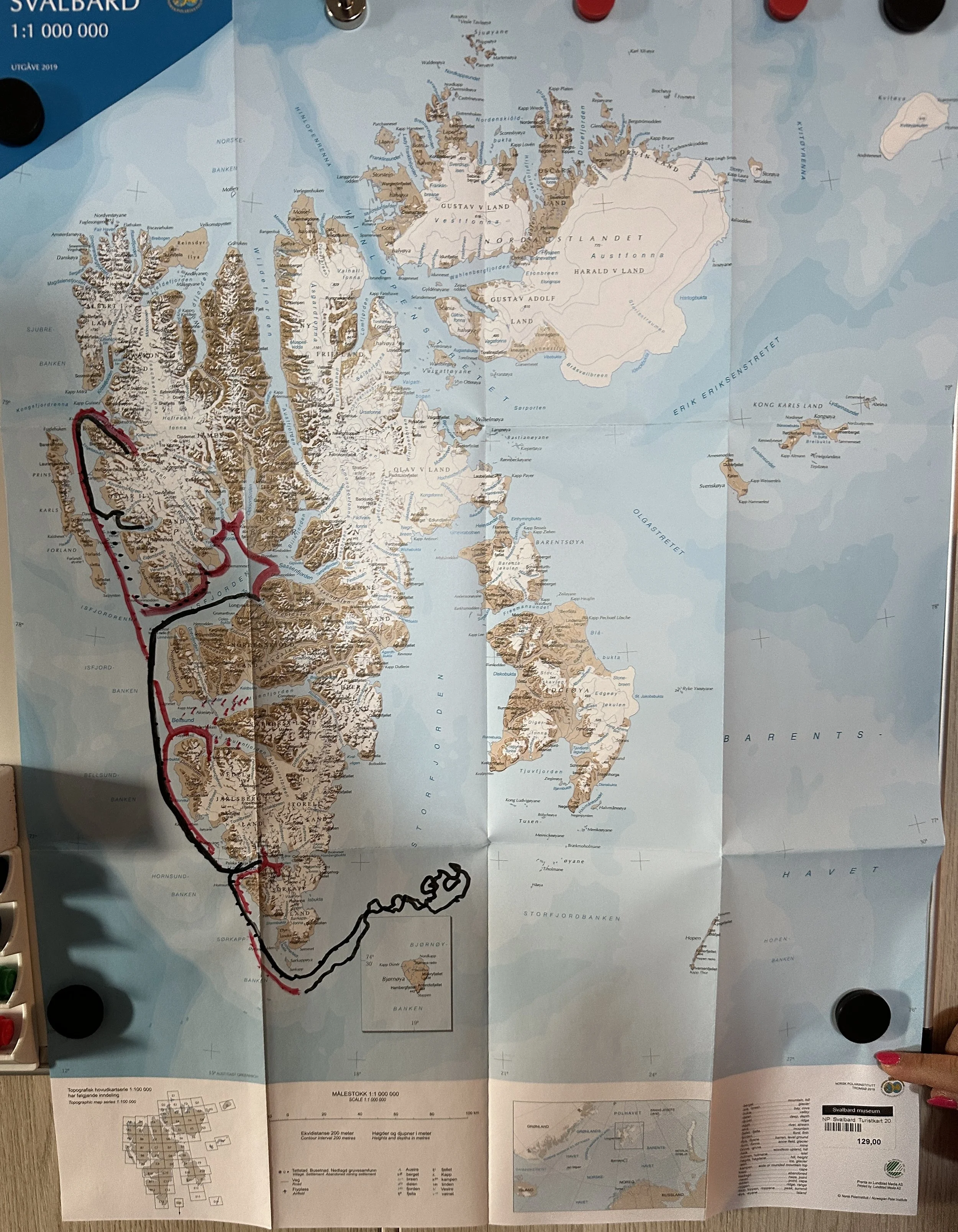
The crew were superb — including an excellent chef — and we were extremely fortunate with our two local expedition guides, Vide and Timo. Their knowledge of Svalbard, its wildlife and the constantly changing Arctic environment added enormously to the experience.
I’d certainly have no hesitation travelling with Arctic Wildlife Tours again.
At the end of my first Svalbard expedition in 2019, I wrote that the question wasn’t whether I would return, but when.
It took six years and rather more failed attempts than I’d anticipated.
But it was worth the wait.
And I know I’ll be back again.
Explore more from Svalbard
My first Svalbard expedition →